Spiritz: Enhancing the User Experience with AI
How we drove deeper personalization and enhanced user experiences through leveraging AI.
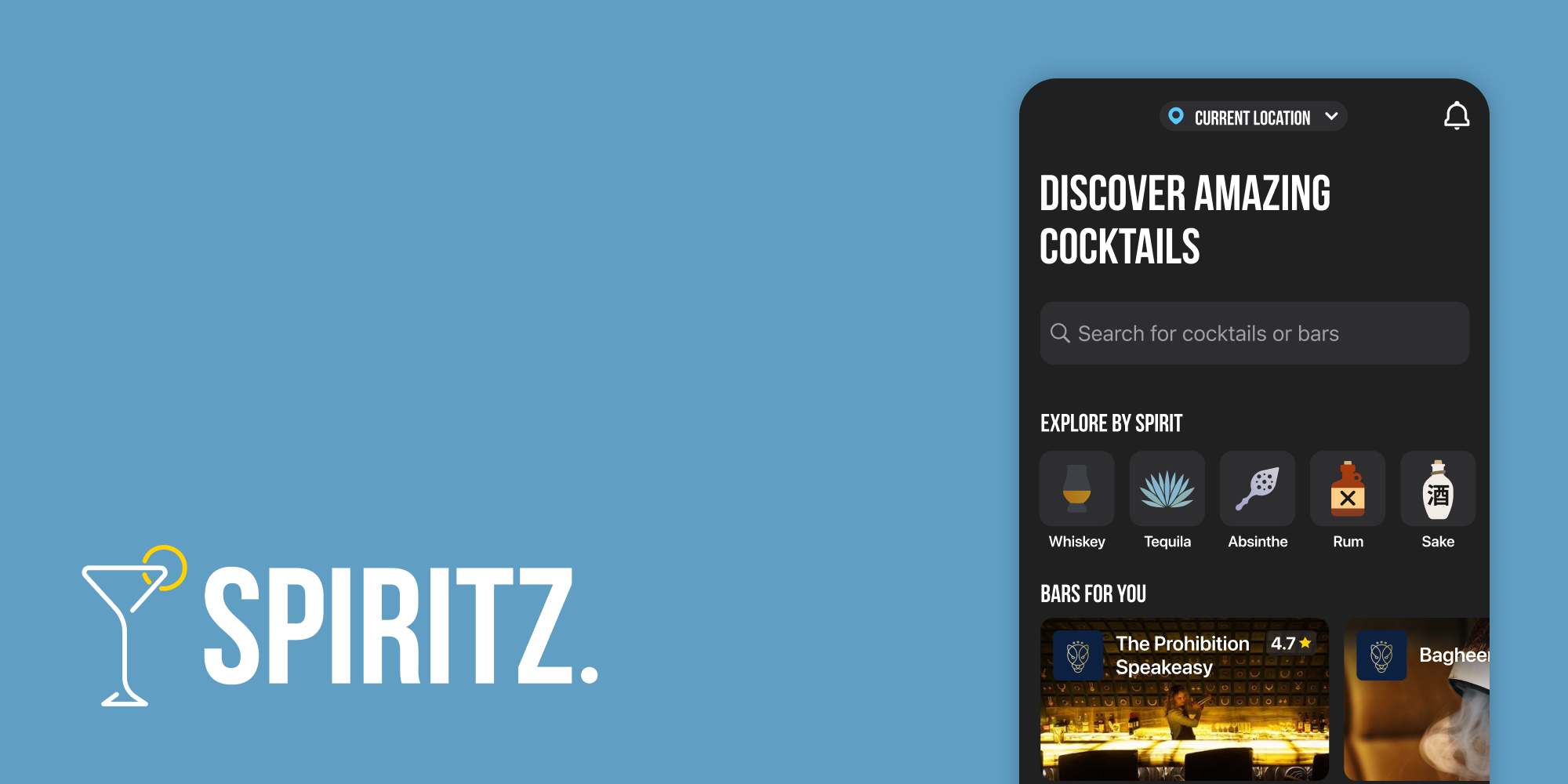
In order to provide relevant recommendations, Spiritz requires a significant amount of data about the types of cocktails and ingredients the user prefers. With the majority of our data driven through user check ins, our goal was to find quick and accurate ways for users to add richer data to their check ins.
Our exploration of the problem led us to three how might we statements that guided our eventual solutions.
How might we make it possible for users to add an entire menu when an establishment they are visiting does not have a menu added?
How might we enable users to add richer data when checking in a cocktail?
How might we enrich our existing data to drive deeper personalization and more accurate recommendations?
Content Database Creation
Building a robust cocktail and ingredient database today requires innovative approaches to data collection and enrichment using a combination of user-generated data and generative AI.
Multi-Model AI Integration
Architected a system supporting multiple AI models, choosing ChatGPT-4o for OCR and menu parsing, while using Gemini for rich content generation.
Cold-Start Problem
Solved the challenge of getting users to contribute data by making the capture of the data simple through menu and ingredient scanning.

To power Spiritz, we integrated multiple AI models — each chosen for its strength in solving a specific problem:
Crowdsourced Menu Parsing
When users check in at unlisted bars, Spiritz scrapes websites or allows menu scanning. We use ChatGPT-4o for optical character recognition (OCR) and natural language parsing of cocktail menus.
Ingredient Enrichment
With over 6,000 ingredients, we use Gemini to generate rich ingredient definitions, tasting notes, and pairing suggestions. These fuel both user education and the backend recommendation engine.
Personalized Recommendations
Spiritz combines check-in history, ratings, taste preferences, and ingredient data to suggest cocktails uniquely suited to each user's palate — functioning like a personal bartender over time.
Decision highlight: Instead of committing to one AI provider, we architected the system to support multi-model orchestration, choosing the right model for each use case. This increased system complexity but delivered significantly better results in both data quality and user satisfaction.
6,000+ ingredient descriptions generated with AI
Increased personalization accuracy leading to higher-quality cocktail suggestions
Empowered users with AI-powered tools for content input.
→The right model for the right task matters — ChatGPT excelled in parsing structured text, while Gemini was superior in generating descriptive content
→AI is not just a backend tool — when surfaced thoughtfully, it directly enhances UX and deepens user trust
→Simplicity in onboarding data (menu scanning, check-ins) is critical to solving cold-start problems in niche marketplaces